A Night Has Phases, and Each Needs Something Different
Dinner service, the late rush, last call, and the sidewalk afterward each put the officer in a different spot doing a different job.
Early in the evening a restaurant wants security to be nearly invisible: an officer near the host stand or the patio rail, watching the door without crowding it. As the room shifts from dining to drinks, the officer moves to the entrance to support ID checks under house policy, keep the line orderly, and track how full the room is getting. Late in the night the work is de-escalation, and at closing it is the doorway, the sidewalk frontage, and the lot as guests and then staff head out.
Security does not replace licensed alcohol-service personnel or law enforcement. Decisions about who is served, and when service stops, belong to the licensee and its serving staff. Officers support those decisions at the door and on the floor, document what happens, and call police when conduct goes beyond what house rules can address.
What Officers Do on This Assignment
Door, Line, and Patio
- Hold a steady presence at the entrance during the hours management sets
- Support ID checking as the venue's policy directs
- Apply dress code, cover, and re-entry rules consistently
- Keep the line orderly and clear of neighboring doorways
- Watch patio and outdoor seating boundaries so drinks and guests stay inside them
Inside the Room
- Keep count of guests against the occupancy figure management provides
- Keep aisles, exits, and restroom corridors passable
- Tell bartenders and managers about guests who appear impaired
- Step into arguments early and separate the parties with conversation
- Walk a guest out at management's direction, calling police where warranted
Closing Time
- Be visible at the door and along the frontage as the room empties
- Encourage departing guests to move along without confrontation
- Observe the venue's parking area and rear door
- Remain while staff close out and walk them to vehicles when requested
- Confirm the premises are clear before management locks up
Incident Documentation
- Record refusals at the door and removals from the premises
- Write incident reports with times, descriptions, and staff involved
- Note when police or EMS were called and the outcome known at the time
- Flag recurring problems or individuals to management
- Provide a shift report at the end of the night
Setting the House Rules Before the Doors Open
Planning is a conversation with the owner or general manager about how the venue actually runs: which nights are busy, when the crowd changes, who checks IDs, what the door policy is, the occupancy figure, and what has gone wrong before. If the local licensing authority has placed conditions on the license that involve security, we need to see them. We also ask where the property line is, because the officer's role stops at the edge of the premises.
The post orders put that in writing. They name who makes the call to refuse entry or remove a guest, how officers and bartenders signal each other, what officers may and may not do physically under house policy and applicable law, when police are called, and what gets documented. Officers are introduced to managers and lead staff during site orientation. Coverage is usually set by night of the week and adjusted for private events, holidays, and season.
Downtown Providence, the Newport Waterfront, and Beach Season
Providence nightlife concentrates in a few areas, among them Downcity, Atwells Avenue on Federal Hill, and the Jewelry District, and its volume follows the academic calendar as much as the weekend. Venues share blocks, so closing time can put several crowds on one sidewalk. Officers keep to the venue's door and premises and leave the street to police.
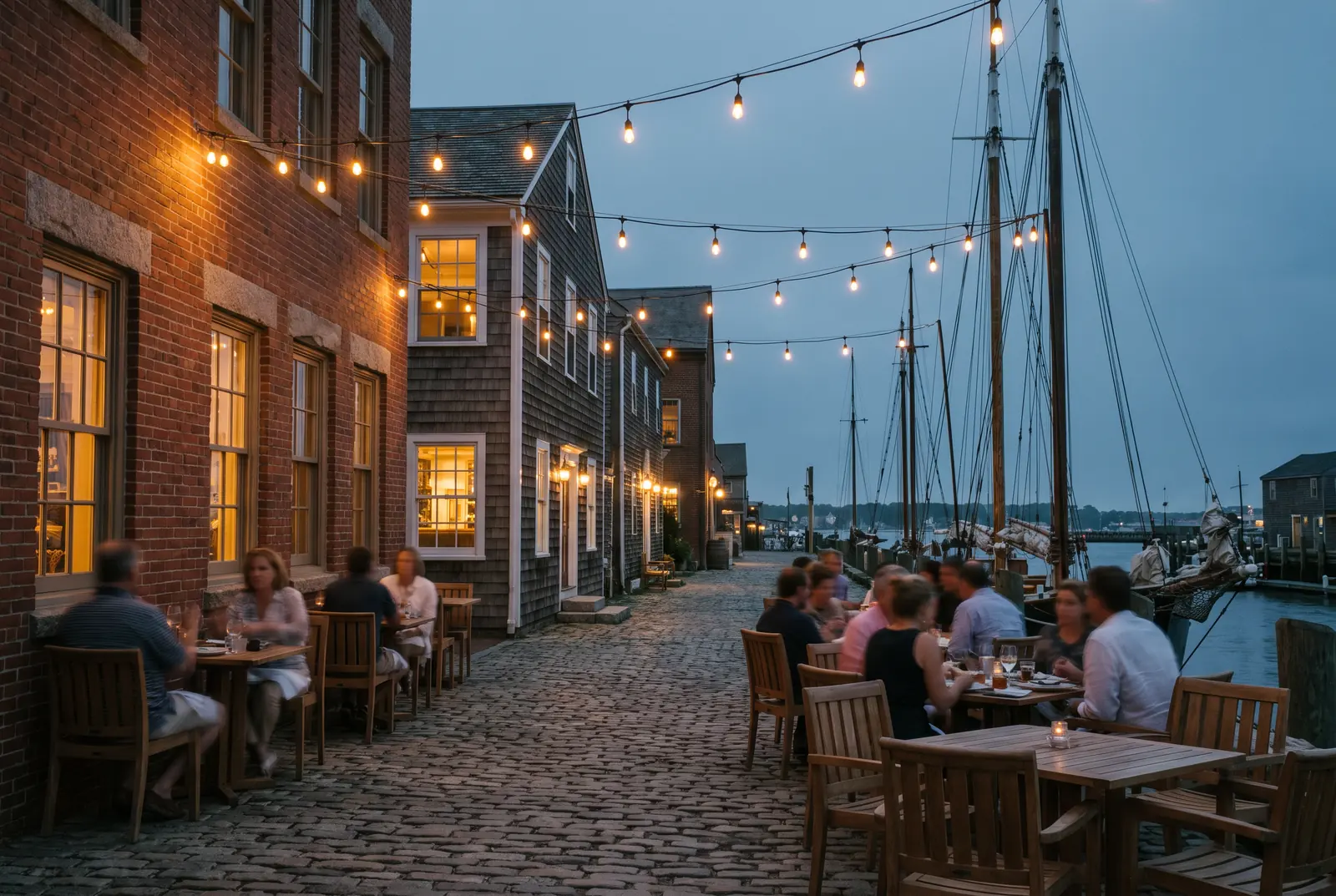
In Newport, Thames Street, the wharves, and Broadway carry heavy foot traffic on summer nights and festival weekends, with wedding parties and visiting groups moving between venues. Winter is far quieter, and many operators scale coverage down to weekends or drop it until spring.
Seasonal beach bars in Narragansett, Westerly's Misquamicut, and along the South County shore run on weather: an outdoor deck can be full by mid-afternoon on a hot Saturday and empty in the rain. Coverage there is seasonal and often starts during the day. Block Island venues are handled as separately planned assignments, since ferry schedules, transportation, lodging where applicable, and staffing determine what is possible.
What the Program Includes
- Support for licensed staff — Officers back up the service decisions made by bartenders and managers and do not make them.
- Consistent door policy — House rules on ID, entry, and re-entry are applied the same way to every guest.
- De-escalation first — Conflicts are addressed early and verbally, with police called when conduct requires it.
- Closing coverage — Officers stay through the end of the night while guests leave and staff close out.
- Written incident record — Refusals, removals, and incidents are documented for management.
Availability and limits. Security officers do not replace licensed alcohol-service personnel or law enforcement, and they have no police powers. Responsibility for alcohol service, ID policy, and occupancy limits remains with the licensee; officers support those policies as the post orders describe. Seasonal and short-notice coverage is subject to officer availability, location, licensing, transportation where relevant, and assignment requirements.
Property Types
- Bars and taverns
- Nightclubs and lounges
- Restaurants with late bar service
- Live-music venues
- Breweries, taprooms, and distillery tasting rooms
- Waterfront restaurants and deck bars
- Seasonal beach bars
- Private event and function spaces
- Hotel bars and rooftop venues
Related Services and Coverage Areas
This service is often combined with Event & Wedding Security, Hotel & Resort Security, Parking & Traffic Security, Unarmed Security Guards. It is frequently requested in Providence, Newport, Narragansett, Westerly, East Greenwich, New Shoreham, and is available across all 39 Rhode Island cities and towns, subject to staffing and assignment requirements.
Frequently Asked Questions
They can support ID checking at the door as your policy directs. Responsibility for lawful alcohol service remains with the licensee and its serving staff, and officers refer any doubtful case to the manager on duty.
Management does, under the process written in the post orders. Officers carry out that decision calmly, give the guest every chance to walk out unassisted, and call police if the person refuses or becomes threatening.
Officers can keep a running count at the door and tell management when the room nears the number you provide. Meeting the occupancy limit set for your premises remains the licensee's responsibility.
Their role covers your premises, doorway, and any private lot. They can ask a line or departing guests to keep moving and can call police, but public sidewalks and streets are for police to manage.
Yes. Seasonal venues are common along the Rhode Island shore, and coverage can be planned for the months and nights you operate, subject to officer availability, location, and assignment requirements. Arrange it before the season opens.