Follow the Freight: Security Organized Around How Goods Move
At an industrial site, most loss and most risk occur where something crosses a line: the gate, the dock door, the employee entrance, the fence.
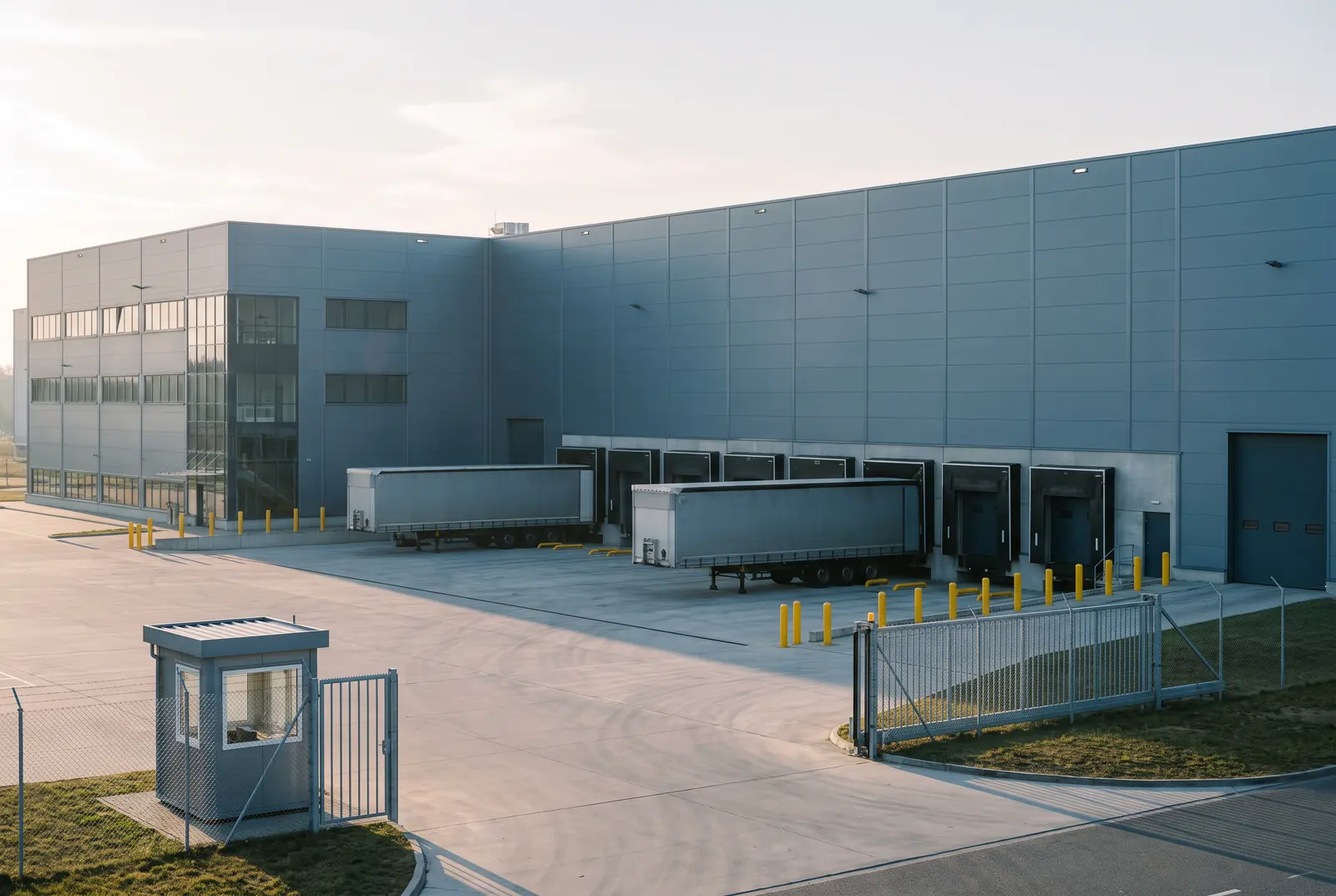
A warehouse or plant has a small number of points where goods, vehicles, and people enter and leave, and the security plan is built on those points. At the truck gate, an officer confirms that the carrier, trailer, and load match what the facility expects. At the dock, an officer watches that doors are open only when a trailer is on them and that drivers stay where the facility wants them. At the employee entrance, the concern is that badges are used and the door is not held for strangers. Along the fence, patrols look for cut fabric, stacked pallets, and vehicles that do not belong.
None of this requires the officer to run the operation. Shipping and receiving staff handle paperwork, counts, and freight. The officer's contribution is an independent set of eyes and a log that records what came through the gate and when. When the facility later needs to reconstruct a shipment, a contractor visit, or an after-hours entry, that log is where the answer is.
What Officers Do on This Assignment
Truck Gate Check-In
- Stopping inbound trucks and confirming carrier, driver, and appointment or pickup number
- Recording tractor and trailer numbers, seal numbers, and arrival times
- Directing drivers to the assigned door, staging lane, or drop lot
- Checking outbound paperwork and seals against the facility's release procedure
- Keeping the gate lane and the approach inside the property clear
Loading Dock and Yard Observation
- Observing loading and unloading from a position the facility designates
- Confirming unused dock doors are closed and secured
- Walking the trailer yard and noting unsealed or unexpected trailers
- Keeping drivers and visitors within permitted areas
- Reporting irregularities to the shipping supervisor without delay
Access Control, Contractors, and Deliveries
- Monitoring employee entrances at shift change and checking badges where required
- Signing in visitors and issuing safety gear or badges the facility provides
- Logging contractors and service vendors against approved work orders
- Recording parcel and small-freight deliveries that bypass the truck gate
- Conducting exit inspections of bags or vehicles only where the facility's written policy provides for them
Perimeter Patrols, Opening, and Closing
- Fence-line and building perimeter patrols on foot or by vehicle
- Checking gates, man doors, roof-access ladders, and fuel or scrap storage areas
- Opening checks before first shift and closing checks after the last
- Interior rounds during idle hours, noting leaks, alarms, and running equipment
- Escalating workplace incidents and emergencies per the contact list
Site Walk, Safety Rules, and Post Orders for an Industrial Post
Planning begins with a walk of the site with the operations or facility manager, following the path a truck takes from the street to the dock and back out. We note where an officer can safely stand, where forklifts and yard tractors operate, which areas are off limits, and what protective equipment the facility requires. The facility's own safety rules come first; officers receive site orientation on them before working the post, and post orders tell officers to stay out of operations they are not trained for.
The post orders then cover the gate procedure step by step, the fields recorded in each log, the patrol route and frequency, and the opening and closing checklist. Workplace incident escalation is written out in detail: injuries, a confrontation between employees, a driver refusing instructions, a spill, or an alarm each lists who is called and in what order. If the facility uses its own gate or yard system, officers use it where specified in the post orders; otherwise logs are kept in a documented format agreed with the client.
Industrial Rhode Island: Ports, Highway Corridors, and Mill Buildings
Industrial property in Rhode Island clusters in a few areas. Quonset Business Park in North Kingstown is a large former military site on the bay with manufacturing, distribution, and marine terminals, and sites there have wide yards, rail and port activity nearby, and exposure to coastal weather. The Port of Providence and the Allens Avenue working waterfront combine bulk terminals, fuel, scrap, and marine businesses along a tight urban corridor where trucks queue close to public streets.
Inland, warehouses and light industry follow the highways: Interstate 95 through Warwick, Cranston, and Providence; Interstate 295 around the western side of the metro area through Johnston, Smithfield, and Lincoln; and Route 146 north through Lincoln and North Smithfield toward Massachusetts. Industrial parks along these routes are typically newer single-story buildings with truck courts and fenced lots, and they are quiet at night, which is when patrols and gate control matter most.
The Blackstone Valley adds older stock. Mill complexes in Pawtucket, Central Falls, Cumberland, and Woonsocket house manufacturers and distributors in multi-story brick buildings with shared yards, many doors, and neighbors on every side. A perimeter there is a set of doors and alleys, not a fence. Winter weather affects every site: snow narrows truck courts, ice slows gate operations, and storms along the bay can mean a closing check includes confirming that yard items are tied down.
What the Program Includes
- Gate discipline — Every truck is checked in and out against the facility's procedure and recorded.
- Independent log — Trailer, seal, contractor, and delivery records give the facility a second source of truth.
- Safety-rule compliance — Officers follow the site's protective equipment and restricted-area rules.
- Off-hours presence — Overnight and weekend patrols cover the hours when the building is idle.
- Written escalation — Incidents are reported to supervisors and emergency services in the order the post orders set.
Availability and limits. Industrial security officers are private security personnel with no police powers. They observe, control access, and document; they do not operate equipment, handle freight, or perform inspections beyond what the facility's written policy and the post orders provide. Coverage is subject to officer availability, location, licensing, and assignment requirements, and armed coverage is conditional on insurance, staffing, and applicable Rhode Island law.
Property Types
- Warehouses and distribution centers
- Manufacturing plants
- Trailer yards and drop lots
- Cold storage facilities
- Marine terminals and waterfront industrial sites
- Industrial parks
- Mill-building manufacturers
- Scrap, recycling, and material yards
- Utility and equipment yards
Related Services and Coverage Areas
This service is often combined with Unarmed Security Guards, Mobile Patrol Services, Office & Commercial Security, Construction Site Security. It is frequently requested in North Kingstown, Providence, Cranston, Johnston, Lincoln, Smithfield, and is available across all 39 Rhode Island cities and towns, subject to staffing and assignment requirements.
Frequently Asked Questions
Typically the carrier, driver, tractor and trailer numbers, seal number, appointment or reference number, and time in and out. The exact fields come from your shipping and receiving procedure and are set in the post orders.
Only where your facility has a written policy that employees have been told about, and only in the manner that policy describes. Officers have no police powers, and refusals are reported to management; officers do not force an inspection.
Officers can check that a seal is present and that its number matches the paperwork at the gate. Counting freight and signing for loads is the job of your shipping and receiving staff.
That depends on your receiving hours and what is stored in the yard. Some sites staff the gate during shipping hours and use patrols overnight; others keep the gate staffed whenever trailers are on site.
The officer calls emergency services if needed, notifies the supervisor and managers on the escalation list, keeps the area clear, and writes an incident report. Investigating and disciplining employees is left to the employer.