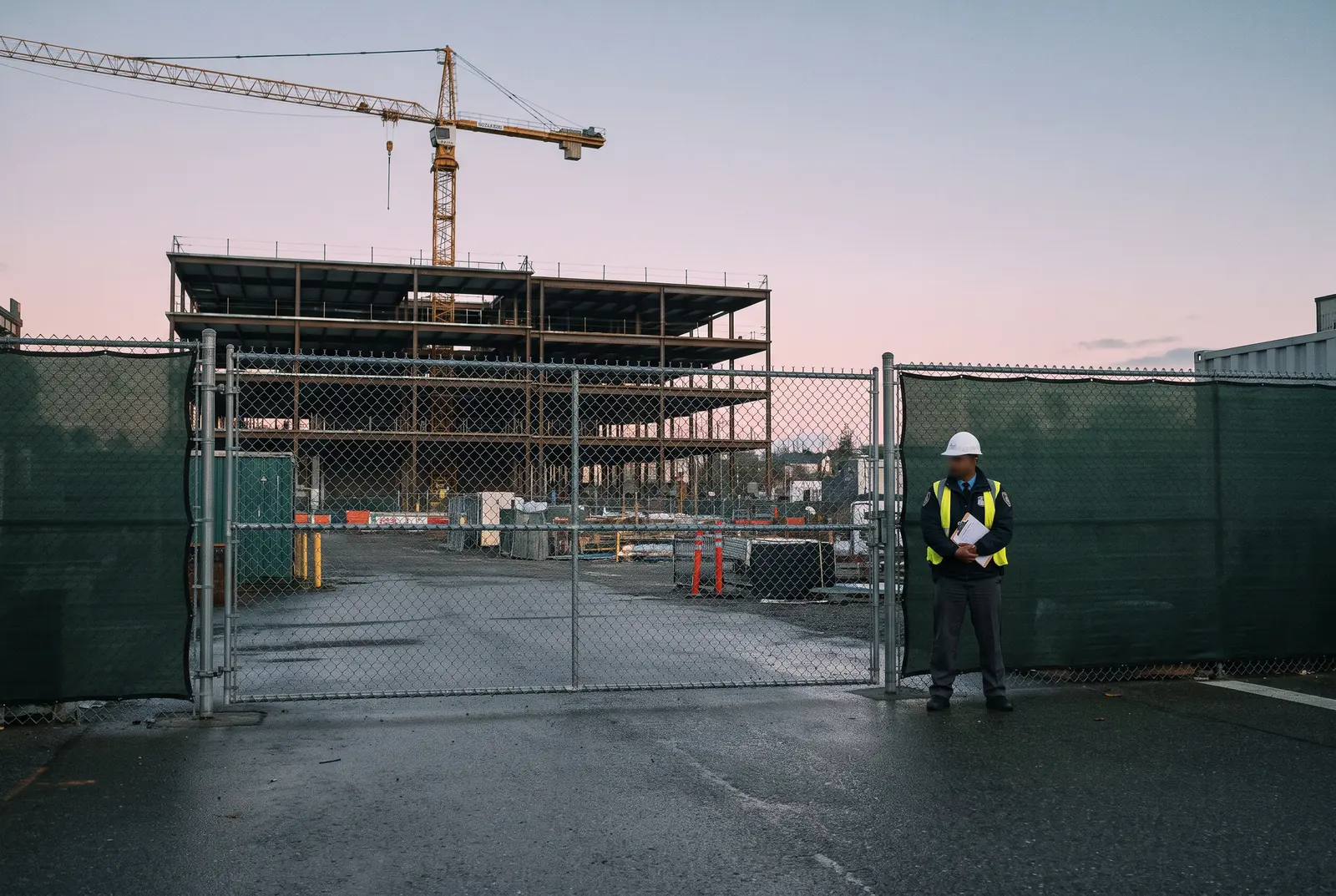
A Jobsite Has Two Different Security Problems
During working hours the problem is who and what comes through the gate; after hours it is an empty site full of things worth taking.
In the daytime the superintendent needs to know which subcontractors are on site, which deliveries arrived and who signed for them, and that nobody has walked in off the street. A gate officer handles that: checking contractor access against the authorized list, keeping delivery logs, pointing trucks to the right laydown area on the property, and keeping the public out of the work zone.
Once the gate is locked the job turns to observation. Officers make foot and vehicle patrols, check the perimeter, watch equipment and material storage, and report hazards such as a downed barrier, a water leak, or a temporary heater left running. Where the project uses remote camera monitoring, the officer works with it as the post orders describe, so the two cover for each other instead of duplicating effort.
What Officers Do on This Assignment
Opening and Gate Control
- Open gates at the time the superintendent sets and admit the first crews
- Check contractors and visitors against the project's authorized list
- Send visitors to the site office or issue passes as the project requires
- Keep pedestrians and unauthorized vehicles out of the work zone
- Direct trucks and equipment on the property side of the gate
Deliveries and Materials
- Log each delivery with time, carrier, and receiving party
- Point drivers to the correct laydown or staging area
- Record material and equipment leaving the site and who authorized it
- Observe storage containers, fuel tanks, and tool storage
- Report unsecured or damaged material to the superintendent
After-Hours Patrol
- Walk and drive the site at scheduled or varied intervals
- Check perimeter fencing, gates, and locks for damage or tampering
- Observe heavy equipment, wire, piping, and installed fixtures
- Ask unauthorized people to leave and call police for trespass or theft
- Coordinate with remote monitoring where the project has it
Hazards and Closing
- Walk the site after the last crew leaves and confirm it is clear
- Lock gates, trailers, and containers at close
- Report downed barriers, open excavations, leaks, and lighting outages
- Note wind, rain, or snow damage to fencing and temporary structures
- Leave a shift report for the superintendent before the morning start
Post Orders That Follow the Project Schedule
Scoping starts with the site logistics plan and a walk with the superintendent or project manager: where the fence runs, how many gates there are, where material is staged, which hours crews work, and what the owner or insurer requires. From that we write post orders covering gate procedure, the authorized-contractor list, delivery logging, patrol routes, the hazard-reporting chain, and who is called at night and in what order.
A site at excavation is a different post from the same site at interior finish. When the building closes in, when copper and fixtures arrive, when the fence line moves, the post orders are revised. Coverage commonly runs nights, weekends, and holidays, with a day gate officer added during phases of heavy truck traffic. Some projects use on-site officers for the highest-exposure phases and mobile patrol visits for the quieter ones.
Tight Urban Lots, Mill Conversions, and Coastal Weather
Construction security Rhode Island projects need depends heavily on where the fence sits. Providence sites are often tight, with a sidewalk on one side and an occupied building on the other, including parcels in the Jewelry District and on the former highway land downtown. Deliveries queue on narrow streets and university neighborhoods put foot traffic past the gate late at night. Directing vehicles on a public street may require a police detail or permit, so gate officers work on the property side of the line.
Mill conversions in Pawtucket, Central Falls, Woonsocket, and West Warwick bring large old buildings with many openings, river frontage, and long-vacant sections that attract trespassers. These projects often call for fire watch during hot work or system impairments, which is scoped as its own assignment.
Along the coast and through South County, weather is the recurring issue. Wind takes down fencing and screening, materials shift, and low sites flood. Residential builds in summer communities can sit on roads with no winter neighbors, where periodic patrol checks may make more sense than a fixed post. Island projects, including Block Island, are planned separately around ferry schedules, transportation, and lodging.
What the Program Includes
- Gate and delivery logs — A written record of who entered, what arrived, and what left the site.
- Phase-based coverage — Hours and post orders change as the project moves from sitework to finish.
- Hazard reporting — Officers report unsafe conditions they observe to the superintendent's contact list.
- Opening and closing duties — Officers can open for the first crew and lock up after the last one.
- Works with monitoring — Where remote camera monitoring is in place, on-site duties are coordinated with it.
Availability and limits. Officers control access and observe on the property; they do not direct traffic on public roads, which may require police details, permits, or other authorization. Coordination with remote monitoring applies only where the project has such a system. New posts and short-notice requests depend on officer availability, location, licensing, transportation where relevant, and assignment requirements.
Property Types
- Commercial and mixed-use building projects
- Multifamily residential construction
- Mill and historic building conversions
- Road-adjacent laydown and staging yards
- Institutional and campus projects
- Coastal and custom residential builds
- Industrial and warehouse construction
- Demolition and site-preparation projects
- Utility and infrastructure work sites
Related Services and Coverage Areas
This service is often combined with Mobile Patrol Services, Fire Watch Security, Industrial & Warehouse Security, Emergency & Temporary Security. It is frequently requested in Providence, Pawtucket, Warwick, Cranston, East Providence, North Kingstown, and is available across all 39 Rhode Island cities and towns, subject to staffing and assignment requirements.
Frequently Asked Questions
It depends on what is on the ground. A site with installed copper, appliances, or fuel and equipment that is easy to move usually justifies a fixed overnight post, while an early-phase site with little exposed value may be served by patrol visits where routes allow. We will recommend one or a mix after seeing the site.
Yes. Opening and closing duties are written into the post orders, including gate times, which keys the officer holds, and who is authorized to enter before the superintendent arrives.
The officer observes from a safe position, tells the person to leave if that can be done safely, calls police for trespass or theft in progress, and notifies the project contact. The encounter goes into an incident report.
We ask for the vendor's contact procedure during scoping and write the handoff into the post orders, for example who checks an area when monitoring sees movement. This applies where the project already has such a system.
It should. Hours, patrol routes, and the number of officers are reviewed at major milestones, and changes are made with reasonable notice subject to officer availability and assignment requirements.