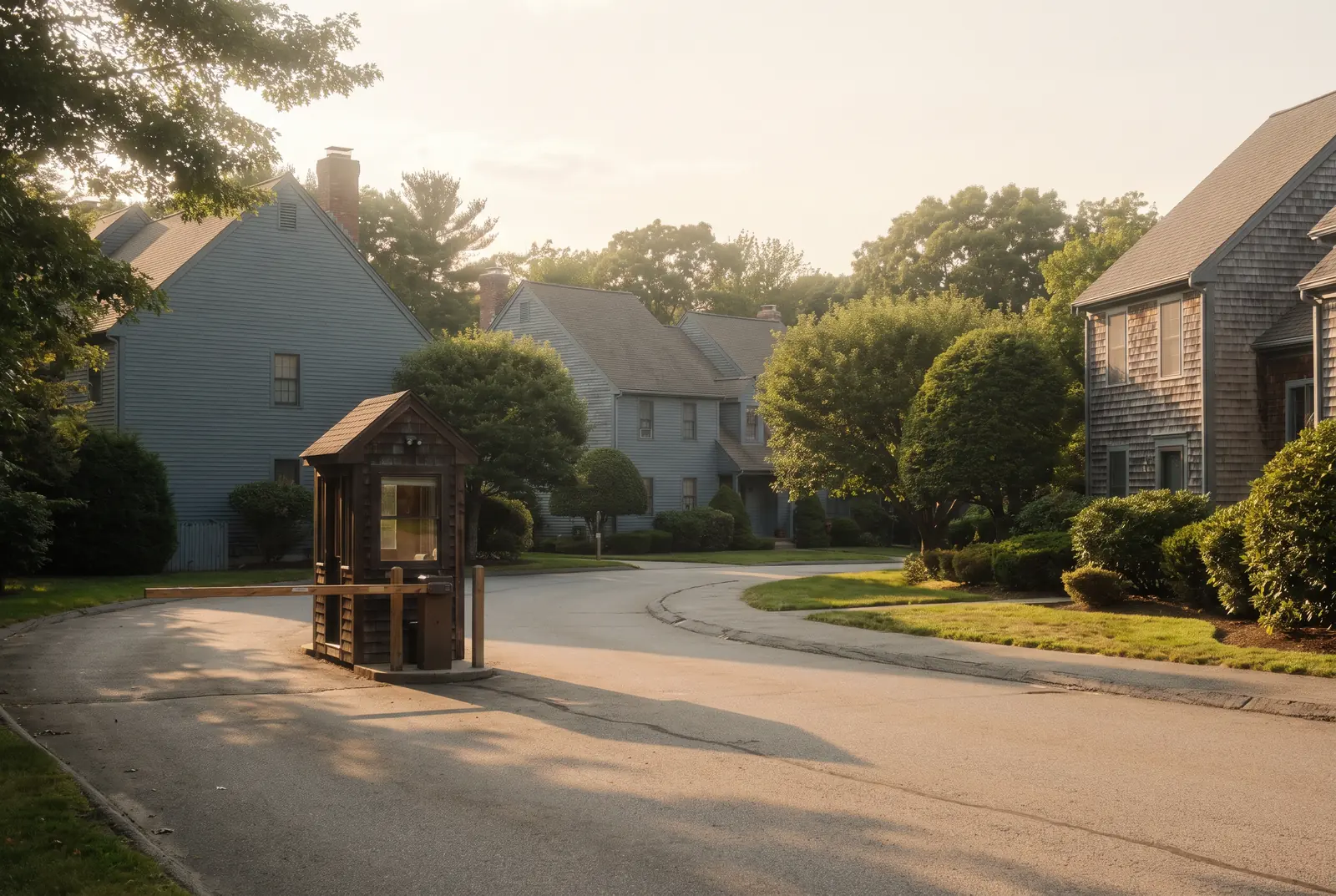
Security That Works for the Board, the Manager, and the People Who Live There
A residential post succeeds when residents barely notice it and the board can still see exactly what was done on every shift.
Residential security is different from commercial work because the people on site are at home. Officers deal with the same residents every week, the same delivery drivers, the same contractor trucks. That familiarity is useful, and it also means the post needs clear written rules so that enforcement of the community's policies stays consistent from one officer and one shift to the next. We build coverage around the association's or owner's existing rules: who may be admitted, how guests are announced, where visitors park, when the pool and fitness room close, and who gets called when something goes wrong.
Our role is security. Officers observe, control access, check the grounds, respond to resident concerns within the post orders, and document what they find. They do not collect fees, lease units, perform maintenance, or make decisions that belong to the board or the property manager. When an officer finds a propped door, a leaking hose bib, or a vehicle in a fire lane, the finding is reported to the people responsible for acting on it.
What Officers Do on This Assignment
Gatehouse and Visitor Management
- Staffing the gatehouse or lobby desk during the hours the community specifies
- Checking guests against resident authorization lists before admitting them
- Logging visitor names, vehicles, and destination units
- Calling residents to confirm unexpected guests when the rules require it
- Directing deliveries, rideshares, and movers to the correct entrance
Vendor and Contractor Access
- Confirming vendors against the manager's approved schedule or work order
- Recording arrival and departure times for contractors and service companies
- Issuing and collecting temporary passes or keys where the community uses them
- Noting work outside permitted hours and reporting it to management
- Keeping access ways clear during move-ins and large deliveries
Parking, Amenities, and Grounds
- Monitoring resident, guest, and reserved parking under the community's rules
- Documenting vehicles in fire lanes, accessible spaces, or unauthorized areas
- Checking pools, clubhouses, fitness rooms, and docks at opening and closing times
- Exterior inspections of buildings, garages, stairwells, and perimeter fencing
- Reporting lighting outages, damage, and hazards found on rounds
Resident Concerns and Incidents
- Responding to noise complaints and asking residents or guests to comply with quiet hours
- Documenting repeat complaints so the board has a record to act on
- Contacting police, fire, or EMS when a situation calls for them
- Notifying the manager or on-call board contact per the escalation list
- Writing incident reports with times, locations, and people involved
Post Orders Written Around Your Governing Documents
Planning starts with the community's own paperwork: the rules and regulations, parking policy, amenity hours, guest policy, and the contact list for the manager and board. From those we draft post orders that tell an officer what to do at the gate, what a complete exterior inspection covers, how a noise complaint is handled from first call to written report, and which situations require a phone call rather than a note in the morning report. The board or manager reviews the post orders before coverage begins.
Hours are set by where the risk actually sits. Some communities want a gatehouse staffed on weekend evenings only; others want an overnight officer who walks the garages and checks amenity doors. Seasonal communities may need coverage that expands in summer and drops back after Labor Day. We will tell you plainly if a request falls outside security work, and post orders are revised when the board changes a policy.
What Rhode Island Communities Ask Security to Handle
Residential security in Rhode Island spans very different settings. Loft and mill conversions in Providence and Pawtucket have shared lobbies, freight entrances, and structured parking that mix residents with commercial tenants. Suburban condominium communities in Warwick, Cranston, Lincoln, and East Greenwich tend to be spread across multiple buildings with surface lots, a clubhouse, and a single drive in. Coastal associations in Narragansett, Newport, and South County deal with guest parking pressure, beach access paths, and docks.
Season changes the work. Shoreline communities fill in summer with guests and short-term occupants who do not know the rules, and then empty out, leaving units dark through the winter and making exterior inspections more important. Near the colleges, move-in and move-out weeks bring trucks, double parking, and unfamiliar faces. After coastal storms and nor'easters, officers can document visible exterior conditions such as downed limbs, blocked drives, and open gates so management knows where to send the right people.
What the Program Includes
- Consistent rule enforcement — Officers apply the community's written policies the same way for every resident and guest.
- Reports the board can use — Shift reports and incident reports give the manager a dated record of access, complaints, and conditions found.
- Clear escalation — Post orders spell out when to call the manager, the on-call board contact, or emergency services.
- Seasonal flexibility — Coverage hours can expand for summer occupancy and contract for the off-season.
- Security role only — Officers observe, control access, and report; management and maintenance decisions stay with the association.
Availability and limits. Residential security officers are private security personnel with no police powers, and they do not provide property-management, maintenance, or leasing services. Enforcement is limited to the community's written rules as set out in the post orders; towing, fines, and resident discipline remain with the association or owner. Coverage is subject to officer availability, location, and assignment requirements.
Property Types
- Condominium associations
- Gated communities
- Homeowners associations
- Apartment complexes
- Mill and loft conversions
- Mixed-use residential buildings
- Age-restricted communities
- Coastal and seasonal communities
- Townhome developments
Related Services and Coverage Areas
This service is often combined with Unarmed Security Guards, Mobile Patrol Services, Estate & Vacation Home Security, Parking & Traffic Security. It is frequently requested in Providence, Warwick, Cranston, East Greenwich, Narragansett, Newport, and is available across all 39 Rhode Island cities and towns, subject to staffing and assignment requirements.
Frequently Asked Questions
Officers can monitor parking, document violations with time, location, and vehicle details, and issue notices if your rules provide for them. Decisions about towing and fines stay with the association or its manager, and the post orders define exactly how far the officer's role goes.
The officer goes to the location, confirms what can be heard, and asks the resident or guest to comply with the community's quiet hours. The contact is documented, repeat issues are flagged to management, and police are called if a situation escalates beyond a rules matter.
No. Many communities use a lobby post, a foot patrol of the grounds, or scheduled vehicle patrols instead. The right format depends on the layout, the number of entrances, and the hours the board is most concerned about.
Officers report maintenance conditions to management and can follow a lockout procedure only if the association has written one into the post orders. They do not perform repairs or act as the property manager.
A written shift report covering rounds completed, visitor and vendor activity, complaints received, and conditions found, plus a separate incident report for anything significant. The format and delivery schedule are agreed during planning.