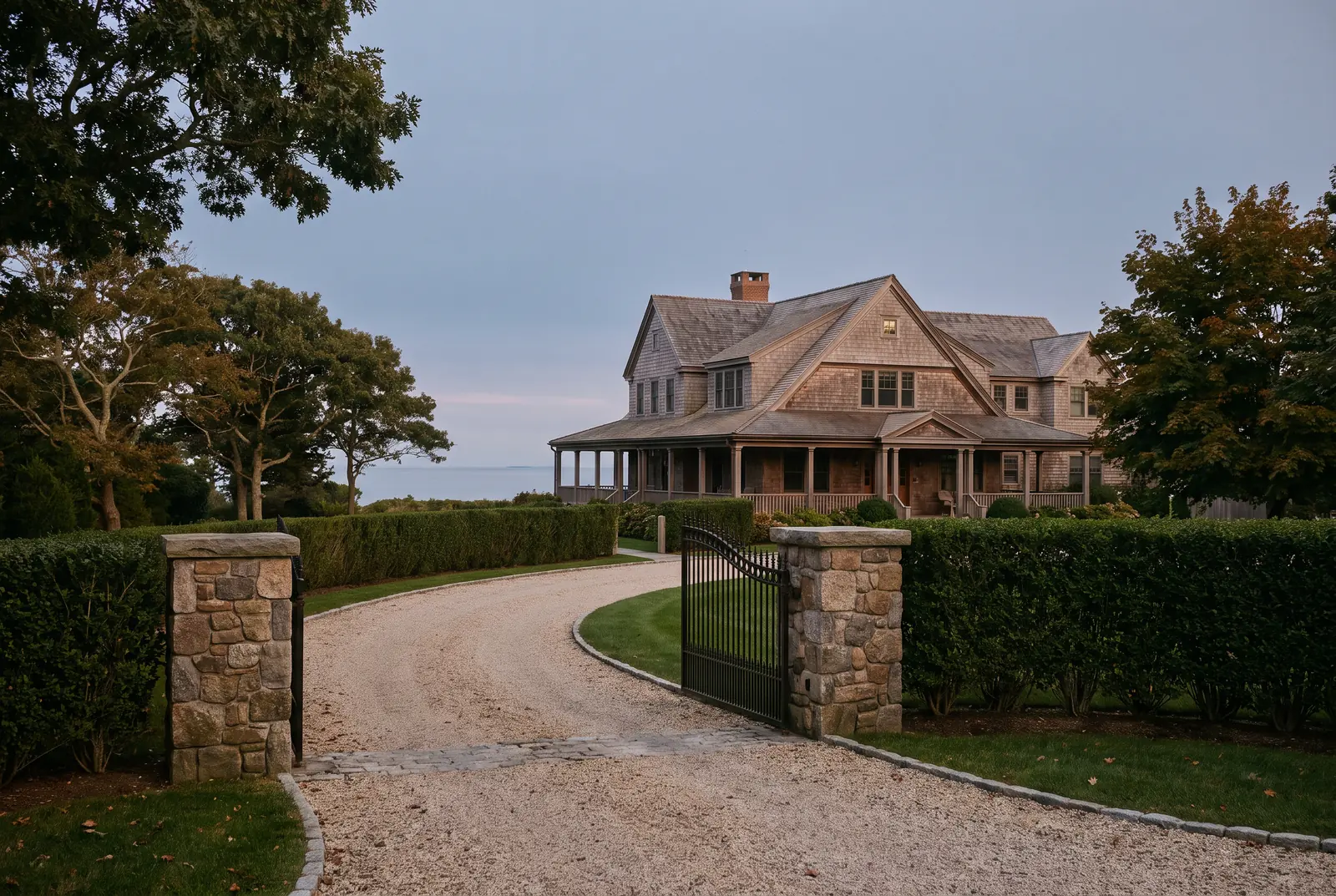
A Private Home Has One Client and Very Little Tolerance for Noise
Estate security is judged by discretion first: who knows the household's schedule, who is on the grounds, and how little attention the coverage draws.
A private residence is not a commercial site with a home on it. The owner's privacy is the asset being protected as much as the property itself, and officers assigned to an estate are briefed accordingly. They do not discuss the household, the guest list, or the owner's travel with vendors, neighbors, or anyone else. Information flows in one direction, to the owner or the person the owner designates, usually an estate manager, family office contact, or caretaker.
The work itself is practical. When the family is in residence, officers manage the gate, confirm visitors and contractors against an approved list, and keep an eye on the perimeter. When the house is closed for the season, scheduled exterior inspections confirm that doors, gates, and outbuildings are as they were left. Officers observe and report. Caretaking, repairs, and property management are separate services and are not part of a security assignment unless separately contracted with a qualified provider.
What Officers Do on This Assignment
Gate and Visitor Management
- Staffing a gatehouse or drive entrance during the hours the owner specifies
- Confirming guests against a list provided by the household or estate manager
- Announcing arrivals by the method the owner prefers
- Turning away unexpected visitors, solicitors, and sightseers politely
- Keeping a private log of arrivals and departures
Vendor and Contractor Access
- Admitting landscapers, pool services, caterers, and trades only as scheduled
- Recording company, vehicle, arrival, and departure for each vendor
- Directing crews to the service entrance and designated work areas
- Noting contractors who arrive without prior approval and holding them at the gate
- Confirming gates and service doors are secured after crews leave
Exterior Inspections and Vacancy Checks
- Walking the perimeter, drive, outbuildings, docks, and beach access points
- Checking exterior doors, windows, gates, and garage doors for signs of entry or tampering
- Scheduled visits to unoccupied homes during the off-season
- Post-storm exterior inspections within the contracted scope, documenting visible conditions
- Reporting findings with photographs where the post orders call for them
Private Event Support
- Checking guests at the drive for dinners, fundraisers, and family gatherings
- Coordinating with caterers, valets, and tent crews on arrival windows
- Keeping private areas of the home and grounds closed to guests
- Observing parking areas and the property line during the event
- A closing walk of the grounds once guests and vendors have left
Planning an Estate Assignment and Writing the Post Orders
Every estate assignment begins with a private conversation and, where possible, a walk of the property with the owner's representative. We need to know how the household runs: which entrances are used, who is always allowed in, who must be announced, which vendors hold keys or codes, and how the owner wants to be contacted, including when not to be. Those preferences become written post orders that every assigned officer reads before a first shift.
For vacancy checks, the post orders define the inspection route, the frequency, and the scope. Scope matters. An officer inspecting an unoccupied home checks the exterior and reports what is visible; entering the residence, adjusting systems, or arranging repairs happens only if the owner has specifically included it and the task is appropriate for security personnel. The reporting line is fixed in advance so that a finding at two in the morning reaches the right person by the right method.
Coastal Rhode Island: Seasonal Houses, Bridges, and Weather
Much of Rhode Island's estate property sits on the water in a handful of places: Newport's Ocean Drive and Bellevue Avenue neighborhoods, Watch Hill in Westerly, Jamestown on Conanicut Island, Little Compton and the Sakonnet shore, and Narragansett. These houses are often occupied for a summer season and closed or lightly used through the winter, which is when regular exterior inspections earn their keep. Long private drives, stone walls, and shoreline frontage mean a meaningful inspection is done on foot, not from a car at the gate.
Geography affects scheduling. Jamestown and Newport are reached by bridge, Little Compton sits at the end of a long rural peninsula, and summer traffic into every shore town slows travel considerably. Coastal storms, from summer tropical systems to winter nor'easters, can close roads and bridges; post-storm inspections are carried out once travel is safe and cover exterior conditions only, within the contracted scope.
Block Island is a separate case. Assignments in New Shoreham are planned well ahead because staffing depends on ferry schedules, transportation on the island, and lodging where applicable. We do not offer same-day island coverage, and we will tell you early whether a requested date is workable.
What the Program Includes
- Discretion first — Household details, schedules, and guest names stay with the owner and the designated contact.
- One reporting line — Shift and inspection reports go to the owner or estate manager by the method they choose.
- Defined inspection scope — Vacancy and post-storm checks follow a written route and cover only what the contract specifies.
- Seasonal scheduling — Coverage can shift from in-residence gate staffing to periodic off-season checks.
- Event-ready — Additional officers can be planned for private events at the residence with advance notice.
Availability and limits. Estate security officers are private security personnel with no police powers. The service does not include property management, caretaking, or repairs unless separately contracted with a qualified provider, and post-storm or vacancy inspections are limited to the contracted scope. Availability depends on officer availability, location, and assignment requirements; Block Island assignments require advance planning around ferries, transportation, and lodging.
Property Types
- Waterfront estates
- Seasonal and vacation homes
- Gated private residences
- Family compounds
- Historic homes in private ownership
- Homes under renovation
- Unoccupied homes during the off-season
- Residences hosting private events
Related Services and Coverage Areas
This service is often combined with Executive Protection, Residential & Condo Security, Event & Wedding Security, Mobile Patrol Services. It is frequently requested in Newport, Westerly, Jamestown, Little Compton, Narragansett, New Shoreham, and is available across all 39 Rhode Island cities and towns, subject to staffing and assignment requirements.
Frequently Asked Questions
Yes. Seasonal vacancy checks are scheduled exterior inspections on a route and frequency agreed with you, with a written report after each visit. They are a security observation service and do not replace a caretaker, a winterization contractor, or an alarm system.
The officer documents the visible exterior condition and notifies the owner or estate manager through the agreed reporting line. Arranging or performing repairs is outside a security assignment; the report is meant to help you send the right contractor.
Assigned officers are briefed that household information is confidential, and logs and reports go only to the contact you name. We do not identify clients or residences in any public material.
Island assignments can be considered, but they are planned separately and in advance. Ferry schedules, on-island transportation, lodging where applicable, and staffing all affect availability, so same-day or short-notice coverage in New Shoreham should not be assumed.
Armed coverage is never assumed. It depends on assignment requirements, licensing, insurance, staffing, and applicable Rhode Island law, and it is discussed during scoping.